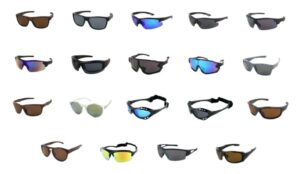
 Make the most of our end of summer warehouse clearance sale. With limited stock available, buy now while stocks last! All warehouse clearance sunglasses will come with a soft pouch included.
Sale ends 07.10.26.

Over 200 models including shooting eyewear, polarised sunglasses & sports sunglasses.
Make the most of our end of summer warehouse clearance sale. With limited stock available, buy now while stocks last! All warehouse clearance sunglasses will come with a soft pouch included.
Sale ends 07.10.26.

There are parallels in sports sunglass use in both golf and tennis – you will see many recreational golfers and tennis players wearing sports sunglasses. Yet at professional level only a minority of golfers and very low numbers of tennis players wear sunglasses.
On both counts it’s a mystery. During the recent Wimbledon Tournament, in a Q & A session with Jamie Murray hosted by the BBC, he was asked why professional tennis players rarely wear sunglasses.
Jamie’s response was, “I don’t know why professional tennis players tend not to wear them. I wore them for 13 years of my career, to protect my eyes and help with all the glare in the sunny conditions we play in, particularly across Australia and the United States. The lens quality from the companies is so good these days – I don’t understand why more players don’t use them!”
Our own take on this is that perhaps it’s because a lot of outdoor tennis stadiums are relatively small and enclosed with restricted air movement meaning the atmosphere can become hot and humid. In such conditions close fitting sports sunglasses can mist up and may not stay in place when players heavily perspire.
For recreational/club tennis players on open outdoor courts, sunglasses will be a real advantage. The benefits include:
And of course, providing UV protection. Long term exposure to harmful UVR can damage eyesight, leading to issues like cataracts, cancer of the eyelids and macular degeneration.
When choosing sunglasses for tennis you should consider features such as: lightweight & durable frame, sport style wrap for peripheral coverage, non-slip nose pads/temple tips for grip and a high contrast lens tint. Browse our range of sports sunglasses.
We’ve just taken delivery of another fab looking polarised sunglass with the ever-popular wayfarer styling. Called Waypoint and manufactured exclusively for us, the matte black frame is made of super strong and durable TR90. The UV400 rated polarised, glare blocking lenses are grey with a blue mirror finish. Weighing in at just 22g it’s ultra-light for all-day wear.

Supplied with a soft carry pouch it’s just £19.95! See it here – Waypoint Polarised Sunglasses
 We’ve just got back from a busy Game Fair at Ragley Hall. Thank you to everyone who came by our stand over the course of the show. Adam Henson the celebrity farmer, lead presenter on BBC’s Countryfile programme and owner of the Cotswold Farm Park in Gloucestershire visited our stand (he’s a loyal customer!) and bought our Novara polarised sunglasses.
Three of our Evolution ambassadors also made the time to visit us:
It was great to see them all!
 The Game Fair is the annual gathering for everyone that is passionate about field sports, countryside pursuits, rural life and the Great British Countryside. One of the largest outdoor consumer events in Europe, it features over 800 exhibitors, a vast array of shows and arenas, interactive displays, ‘have a go’ events and a huge selection of food and drink.
And we’re back having exhibited at every Game Fair held since 2008. We will be showing the full range of Evolution shooting eyewear including Shadow, our brand-new model officially launched at the Show. Plus Falcon RX, our new prescription shooting model will also be available. In addition to shooting eyewear, we’ll have over 60 polarised sunglasses on display.
Find us at: Evolution Eyewear, Stand no: H1328 in Row H (next to the CPSA): 24-26 July, Ragley Hall (near Stratford Upon Avon).

We have just released a brand new shooting eyewear model – Evolution Shadow – high performance shooting eyewear packed with features yet at an affordable price.
Ultra lightweight at just 32g, Shadow is designed for extended wear comfort. Unisex fitting, a key feature is its malleable temple tips, allowing for a customised fit – including adjustment for younger shooters.
Shadow has a large polycarbonate, impact-resistant lens with a 10-base curve for enhanced coverage and protection. The rimless lens design and small, adjustable nose pads ensure an unobstructed field of vision. The optical grade Class 1 and UV400 rated lenses also include three advanced coatings: Oleophobic & Hydrophobic to repel water, grease and fingerprints; an easy lens cleaning with low-friction surface; and scratch resistance.
Available in six individual colours: Grey, Purple, Rose, Orange, Yellow, Clear at £29.95 each. Also available as a 4 Colour Bundle (Grey, Purple, Orange and Yellow) at £99.95.
Full breakdown of Evolution Shadow features:

Former British Open Sporting Champion, Brody Woollard said, “Evolution Shadow are superb – no other word for it. The lens quality is outstanding and having adjustable arms is great. They’re light and incredibly comfortable to wear. With very affordable prices I highly recommend them”.
You can view Evolution Shadow, along with the rest our our shooting eyewear range, on our Shooting Eyewear page.

We have just taken delivery of a brand-new prescription shooting model with optical insert. Manufactured exclusively us, it’s called Falcon RX.
Falcon RX comes with 4 interchangeable lenses: Grey, Yellow, Orange and Purple.
Features:
Falcon RX is supplied with a detachable prescription optical insert. All you need do is take the optical insert to your usual opticians and ask them to put lenses in made to your normal prescription (we also provide this service – please email for more information).
Supplied with a soft carry pouch, cleaning cloth and a hard case, the Falcon RX 4 Lens Set is just £59.95 – exceptional value.
Whilst primarily aimed at shooting enthusiasts, Falcon RX can be used for other sports such as cycling and golf. You can view all of our prescription eyewear options – Prescription – Evolution Sunglasses
Newly manufactured for us we have two brand new sunglasses with Class 1 optical grade, glare blocking polycarbonate polarised lenses. Both models have frames made of light but super strong TR90.
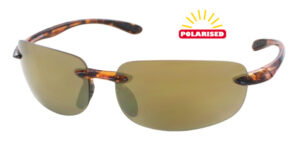
Rivello – with classic styling, it’s a true unisex model that can be used for any sport whilst looking terrific when you’re just out and about. Ultra lightweight, it has dark tortoise temples and brown polarised lenses with a gold mirror finish.
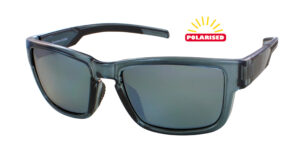
Broadwalk – with the ever-popular wayfarer styling, the super looking Broadwalk has a crystal grey frame and grey polarised lenses with a flash mirror finish.
With both models the polarised film is sandwiched between two layers of the polycarbonate meaning the polarised film can never wear out. And importantly the polycarbonate lenses also provide impact protection. Both models have the styling and lens quality that you might expect to pay upwards of £60 for, but they are both only £29.95 – including a hard case. Amazing value!
The other polycarbonate polarised sunglasses we have are:
View them all – Polarised Polycarbonate Sunglasses
Over the last 19 years since we first launched Evolution, we have come across a lot of misconceptions and false information about sunglasses. So we’ve decided to clear up the top 5 sunglass myths.
 While many sunglasses may look the part, not all of them protect your eyes from harmful UV rays. In fact, cheap sunglasses – like the ones you might pick up at a beach market or tourist stall – may have no UV protection at all. Sunglasses without UV filters can actually be worse than wearing none at all. This is because your pupils dilate when you wear dark lenses, allowing more harmful rays into the eye. Always look for a UKCA or CE mark, typically found on the inside of the temple. Good quality sunglasses will also likely have UV400 printed on them (or on a label/sticker supplied with them), which means they provide over 99% protection from harmful UVR. And you don’t have to buy expensive sunglasses to get protection – it is perfectly possible to buy sunglasses at under £20 (like Evolution!) that provide UV400 protection.
Sunglasses aren’t just for looking cool – they’re essential for protecting your eyes from long-term UV damage. Prolonged exposure to UV can lead to eye problems later in life, including cataracts, macular degeneration, and eyelid cancer. The damage can take years or even decades to show and can have a big impact on vision health later in life. Wearing sunglasses regularly when outdoors (throughout the year) will minimise the risks of these conditions.
UV protection has nothing to do with lens colour or the density of tint of the sunglass lens. The UV filter applied to a lens is clear so even a clear lens can provide 100% protection from UVR. It’s worth noting that even without the addition of a UV filter, polycarbonate – the material used in the manufacture of most sports eyewear lenses – will screen out over 95% of UVR.
Children receive three times the annual sun exposure of adults, increasing their susceptibility to UV eye damage. UV damage is both cumulative and irreversible so it is important to protect children’s eyes as early as possible. Sun-related eye damage occurs in the early ages of childhood, particularly between the ages of three and 12. The simple precaution of ensuring children wear sunglasses will help reduce a child’s chance of developing eye problems such as macular degeneration and cancer of the eyelids later in life.
Even when it’s overcast, up to 90% of UV radiation can still penetrate the clouds and so UV rays on cloudy days are still dangerous. As your eyes are 10 times more sensitive to UV than skin, more than any other organ, the eye can suffer significant injury from the sun. Be sure to wear sunglasses and skin protection while outside at all times of the year.
Remember, when it comes to sunglasses don’t be misled by these common myths. The key is to look for UV protection, whether you’re buying high-end or budget-friendly sunglasses. Browse our gallery to help find your new pair of sunglasses.

Claire Bagehot is the latest high profile clay shooter to join the roster of Ambassadors for Evolution Shooting Eyewear. Claire is a competitive clay shooter, taking part in major championships across England and Wales. She is also a qualified CPSA English Sporting referee. Alongside her competitive shooting, Claire founded Support Our Sport UK and writes a column for the Shooting Times. Claire has worn Evolution shooting eyewear since she took up shooting two years ago.
Claire said, “I’ve worn Evolution shooting eyewear since I started shooting two years ago. They’re light, comfortable and completely stable. The lenses are excellent and help me pick up targets confidently in all light conditions. I’m proud to represent Evolution as an Ambassador”.
 We have an expanding range of Evolution branded eyewear accessories – the latest addition is our new versatile, multi-purpose Cleaning Mitt. Made from a high-quality velvet texture microfibre cloth, it fits left or right hand.
Use for cleaning/wiping:
…and more. And it’s just £4.95!
See the full range of our eyewear accessories including: anti-fog, lens cleaner, eyewear / sunglass hard cases (in various sizes) and adjustable frame cords.
 When it comes to choosing sports eyewear, the lens colour is an important consideration. We have covered this subject before but it is always worth returning to. The following is a general guide to the most common eyewear lens colours and the benefits of using them.
Grey lenses are the most widely used lens colour and reduce/dull light. They reduce brightness without altering contrast. Best for bright sun/bright light conditions. Extensively used in most outdoor sports, and leisure style sunglasses. Most grey lenses are rated Category 3.
Smoke lenses are similar to grey but usually have a blue, amber or brown hue. It is frequently used as the base colour when a mirror finish is applied to the lens. Like grey lenses, they are used for strong sun conditions. Most smoke lenses are rated Category 3.
The Green G15 lens was first popularised by Ray-Ban and used by pilots in their classic aviator sunglasses. It provides a soothing tone, helps cut glare and enhances contrast. A good alternative to grey lenses and suited to bright sun conditions. Most are rated Category 3.
Brown, light brown and amber lenses are good all-round colours for many light conditions including variable conditions. They increase contrast and sharpen the field of vision. This makes them popular eyewear lens colours for golf, clay target shooting and skiing. Most are rated Category 2 or 3.
Yellow lenses are high contrast lenses ideal for boosting contrast in low/poor light, low visibility, and cloudy conditions. Not suitable for bright, sunny conditions. Popular with clay target and game shooting enthusiasts and cyclists. They are typically rated either Category 0 or Category 1.
Rose, red and orange lenses are high-definition, high contrast lens colours making them suited to enhancing contrast in overcast conditions. These colours filter out blue light which means the field of vision will appear in sharper focus. Good colours for use at the end of the day when eyes are tired. Popular for shooting, cycling, skiing and golfing eyewear. Most are rated Category 1 or 2.
Purple lenses are a popular all-weather option suited to most light conditions. Known as ‘the background neutraliser’ purple lenses dull a green background. Purple has a soothing tone making it ideal for extended wear comfort. Now one of the most popular lens colours for shooting eyewear and rapidly gaining popularity amongst golfers. Most are rated Category 2.
Blue and turquoise lens colours can help accentuate gold and yellow colours, making them popular for archery (gold bull) and tennis players (yellow ball). Most are rated either Category 1 or 2.
Clear lenses provide essential eye protection from impact, dust, dirt, insects or abrasion. Widely used for shooting, airsoft BB, equestrian, cycling and floodlit sports. Clear lenses are rated Category 0. View our range of safety eyewear.

When it comes to sunglasses & sports eyewear, the material used for the frame is important. We use a material called TR90. Although TR90 comes at a higher cost than polycarbonate, the benefits are significant and that makes it the right choice for our eyewear.
TR90 is a thermoplastic polymer developed using Swiss technology, with nylon as a key component. It’s widely recognised in the eyewear industry for its key features, balancing strength, flexibility and lightweight comfort. TR90 is up to 35% lighter than polycarbonate (which is considered a lightweight material). And it’s typically 50% lighter than acetate (often used in fashion style sunglasses).
Despite being lightweight, TR90 is exceptionally durable. It is pliable and will bend without breaking while polycarbonate is more rigid and may snap under stress (particularly in extreme cold conditions).
So to summarise the benefits of TR90 frames:
Around 90% of our eyewear is now made with TR90, and of course every new model we introduce will have TR90 frames. We only have a few models (and limited stock) of our older polycarbonate frames.

Our Evolution Rapide model is arguably the best value shooting eyewear available in the UK, with individual colours retailing at just £19.95 each. We have just launched an RX version of Rapide for prescription wearers that features a purpose-designed prescription optical insert. It will fit all the existing six Rapide colours (Clear, Grey, Orange, Purple, Rose, Yellow).

Additionally, it can be purchased as a 4 Colour Bundle with Grey, Yellow, Orange & Purple colours. With the 4 Colour Bundle you don’t change lenses – there are four complete frames – all you do is switch the prescription optical insert (which attaches to the nose piece) from colour to colour, making it very quick and simple. Any competent optician can fit prescription lenses to the optical insert: we also provide this service – email: info@evolutionsunglasses.com for details.
The large, wide optical insert minimises any interference with peripheral vision. The usual features of Rapide include:
The individual Rapide RX colours retail at £29.95 each and the Rapide RX 4 Colour Bundle at £79.95.
We offer a range of shooting eyewear models, available as individual colours, interchangeable multi-lens sets and 4 colour bundles. They are at different price points, starting at £19.95 and going up to £185, ensuring there’s something for everyone. Whether you’re looking for a budget-friendly option or a high-end model with advanced lens features, Evolution have got you covered.
Below is a guide to our most popular shooting eyewear models, with a breakdown of the features. As a starting point, the essential features of all the models are: shatterproof, impact resistant polycarbonate lenses, class 1 optical grade lenses and with UV400 rated protection.


Shop now – explore our full range of shooting eyewear and find the perfect pair for your needs.
Download the Evolution shooting & safety eyewear brochure below for a full guide.
